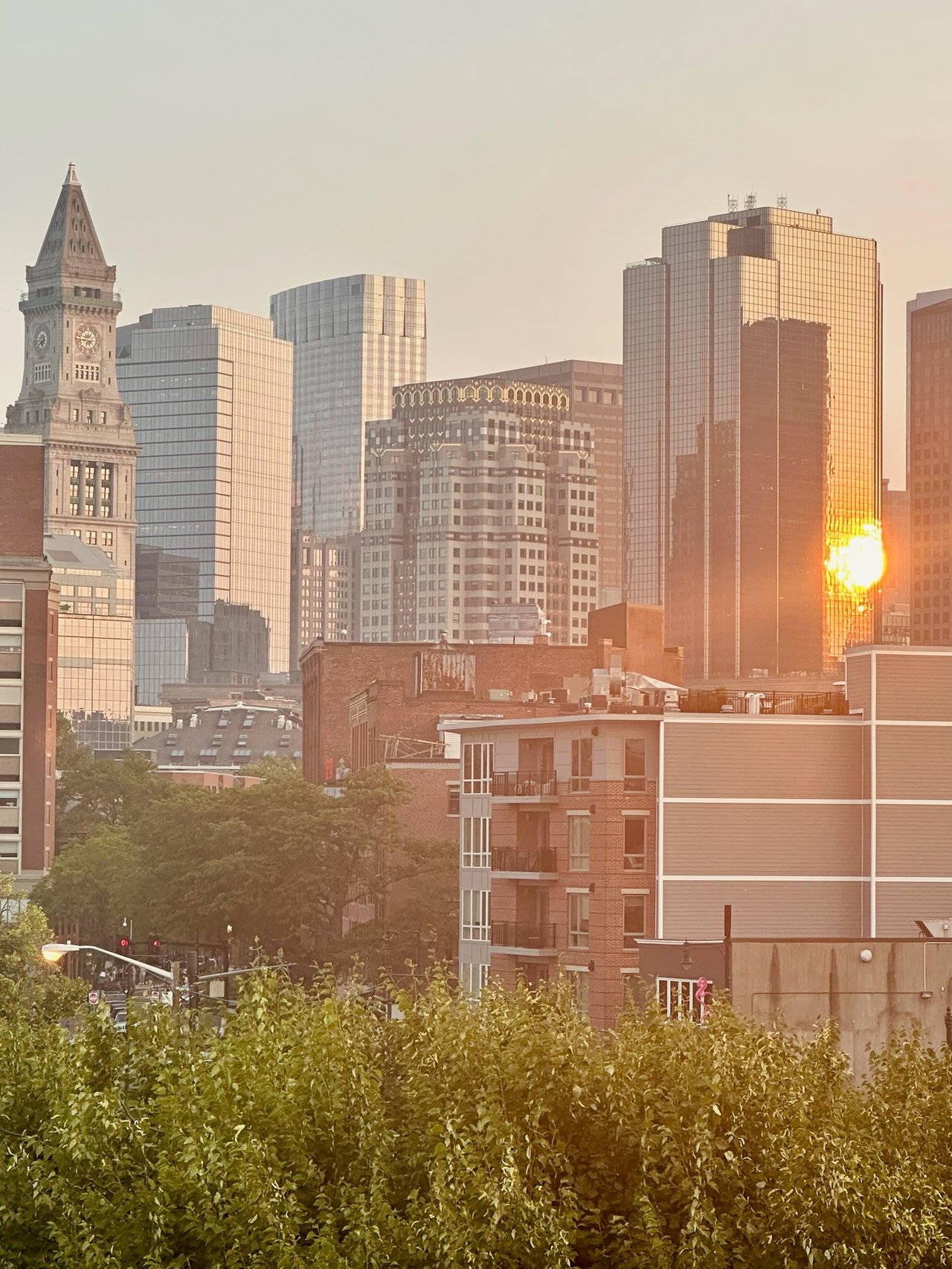
One of the most common conversations we have with buyers new to Boston — or Boston buyers ready to move neighborhoods — begins the same way: "We love the idea of the North End, but we're also looking at Back Bay and Beacon Hill, and someone told us the Seaport might be worth considering." It is a reasonable place to start and an overwhelming one to navigate without guidance.
Here is our honest, experience-based comparison of four neighborhoods that consistently attract Boston's most discerning buyers.
The North End: Character You Cannot Manufacture
The North End is Boston at its most irreducibly itself. Narrow streets, brick buildings, the smell of good food, and a community density that makes you feel like you live somewhere rather than just reside somewhere. It is the neighborhood that most consistently surprises buyers from other cities — they arrive expecting a tourist attraction and discover a genuinely livable urban village.
The trade-offs are real: parking is a serious challenge, units trend smaller, and the neighborhood's popularity means competition for good inventory is fierce. But for buyers who prioritize walkability, authenticity, and long-term value in a supply-constrained market, the North End has a compelling case that is difficult to argue with.
Best for: Buyers who want neighborhood character, walkability, and proximity to the waterfront. Strong investment fundamentals.
Price range: Condos generally range from the mid-$500s for smaller units to well over $1.5M for larger renovated spaces with outdoor access.
The Seaport: Modern Boston at Its Most Ambitious
The Seaport is the neighborhood Boston built for the 21st century, and in 2026 it has largely delivered on its promise. New construction, water views, world-class amenities, and a corporate and cultural energy that keeps the neighborhood humming — these are genuine advantages that appeal to a specific kind of buyer.
What the Seaport trades for modernity is depth of character. It is a newer neighborhood, and it feels like one. The streets are wider, the buildings are glass and steel, and the sense of history that permeates the North End and Beacon Hill is absent here. For buyers who value that patina, the Seaport will always feel slightly incomplete. For buyers who prioritize contemporary amenities, harbor views, and easy access to the airport and South Station, it is an exceptional choice.
Best for: Corporate relocators, buyers prioritizing new construction and amenities, investors focused on rental demand.
Price range: Luxury condos typically start in the mid-$800s and extend well into the multiple millions for penthouse and harbor-view units.
Back Bay: Boston's Most Reliable Luxury Address
If the North End is Boston's most characterful neighborhood and the Seaport is its most modern, Back Bay is its most reliably prestigious. The brownstone-lined streets between the Public Garden and Kenmore Square represent a vision of urban Boston that has maintained its desirability for over a century — and shows no signs of changing.
Back Bay buyers are typically drawn by the combination of architectural grandeur, Newbury Street access, proximity to the Public Garden, and the simple fact that a Back Bay address carries weight that other Boston neighborhoods are still building toward. The market here is deep and liquid, meaning well-priced properties move quickly and values hold through cycles.
The challenge for buyers is price: Back Bay is expensive by any measure, and the combination of high purchase prices and strong HOA fees requires a serious financial commitment. But for buyers with the means, the case for Back Bay as a long-term hold is as strong as anywhere in Boston.
Best for: Buyers seeking architectural character, prestige, and long-term value stability. Strong for both primary residence and investment.
Price range: Condos range from the high $700s for smaller units to $5M and beyond for full-floor or penthouse brownstone conversions.
Beacon Hill: Small Scale, High Stakes
Beacon Hill is Boston's most intimate luxury neighborhood — a residential enclave of Federal and Greek Revival rowhouses on a literal hill above the Common that feels, at its best, like a page out of a Henry James novel. It is quiet in the way that only a neighborhood with strict architectural controls and a deeply committed residential community can be.
Buyers drawn to Beacon Hill are usually drawn by the aesthetic — gas lanterns, brick sidewalks, window boxes — and by the sense of being in one of the most historically significant addresses in American urban history. The neighborhood's proximity to the State House, the Common, and MGH makes it popular with legal, medical, and political professionals who want to walk to work.
Inventory on the Hill is extremely limited, and competition for the best units is significant. This is not a neighborhood where patience is rewarded — when the right property appears, the buyers who are prepared to move quickly are the ones who get it.
Best for: Buyers seeking intimacy, history, and architectural distinction. Proximity to MGH and downtown makes it perennially attractive.
Price range: Condos range from the mid-$600s for smaller units to $3M and above for larger townhouse-style homes.
So Which Neighborhood Is Right for You?
The honest answer is that it depends on what you value — and the best way to figure that out is a conversation with a broker who knows all four neighborhoods from the inside. At D'Ambrosio Group, we have represented buyers and sellers across every one of these neighborhoods, and we know the questions to ask that will get you to clarity faster than any online guide can.
This is Boston living. Let us help you find your version of it.
Ready to start your Boston neighborhood search? Contact D'Ambrosio Group today.